The Science behind

The Genesis of Probiotic Cleaning Research
Healthcare-associated infections (HAIs) remain a major challenge in medical settings. Recognizing the limitations of chemical disinfectants—which provide only transient effects and contribute to antibiotic resistance—researchers sought sustainable, biology-based alternatives.
Pioneering work began in the mid-2000s under Professor Elisabetta Caselli and collaborators at the University of Ferrara (Italy). Their investigations into microbial biocontrol led to a series of studies, including a landmark multicentre trial involving independent hospitals in Belgium and Italy, analysing approximately 20,000 surface samples.
The novel approach used food-grade Bacillus spores (B. subtilis, B. pumilus, and B. megaterium) as part of a daily cleaning protocol. Compared to conventional chemical methods, it achieved a 50–89% reduction in HAI-related pathogens. The effect emerged after 3–4 weeks and remained stable over time. Reverting to conventional cleaning caused pathogen levels to rise again, confirming the biological mechanism’s direct role.
Since then, several other leading European research institutes (including CNRS in France, La Charité hospital in Berlin, universities in Finland, UK, The Netherlands and Belgium) have conducted similar research. These consistent findings across multiple publications establishing microbial cleaning as a particularly promising and highly efficient, eco-friendly, and long-lasting strategy for surface hygiene —opening the path to broader applications beyond hospitals.
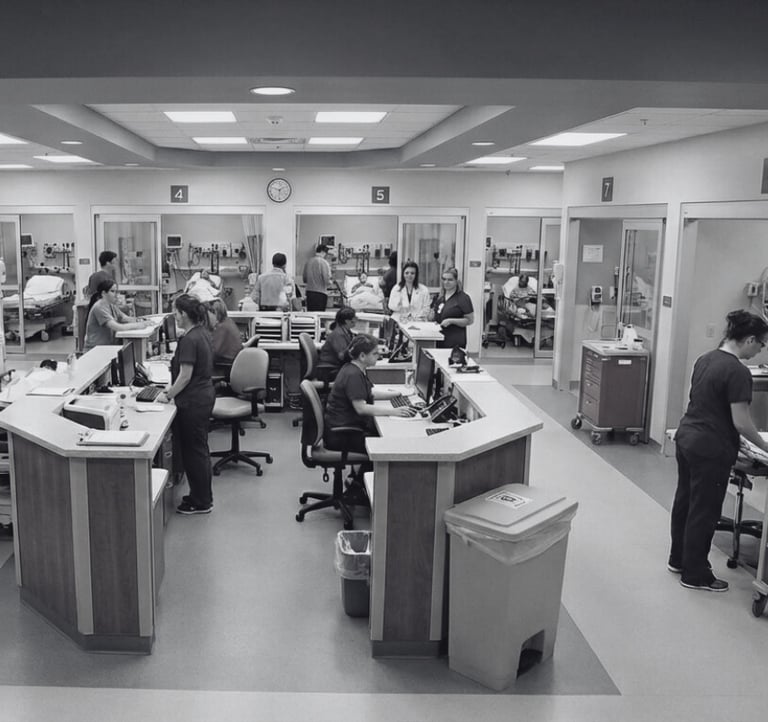
Historical context: Research initiated to combat the 5.7% prevalence of Healthcare-Associated Infections in European acute care hospitals.
How It Works: The Principle of Competitive Exclusion (also known as Gause’s Law)
Traditional cleaning relies on a "scorched-earth" strategy: using chemicals to kill 99.9% of all microorganisms. However, environmental microbiology shows that this creates an unstable biological vacuum. Since opportunistic bacteria are often the fastest to multiply, they quickly recolonize these empty surfaces, often returning stronger and more resistant.
Nature’s Smartest Defense: Gause’s Law
Probiotic Cleaning flips the script by applying the Competitive Exclusion Principle (also known as Gause’s Law). This fundamental rule of ecology states that two species competing for the same resources cannot coexist in the same space. One will always dominate.
By introducing a dominant population of beneficial Bacillus spores, Probiotic Cleaning masterfully occupies surface area, leaving no room for pathogens to survive.
The 3-Step Biological Takeover:
Colonize: Once sprayed, the probiotics instantly occupy the "ecological niche" on the surface.
Compete: They actively consume the organic matter (dirt, grease, and residues) that harmful bacteria need to feed on.
Protect: They establish a stable, protective bio-shield that remains active for at least 5 full days, preventing the establishment of new germs.
1| Surface before cleaning - THE CHAOS
2| Surface 1 min after cleaning (any method) - THE BIOLOGICAL VACUUM
3| Surface 2.5 hrs after classic cleaning - THE RECOLONIZATION
4| Surface 2.5 hrs after Probiotic Cleaning - THE BIO-SHIELD
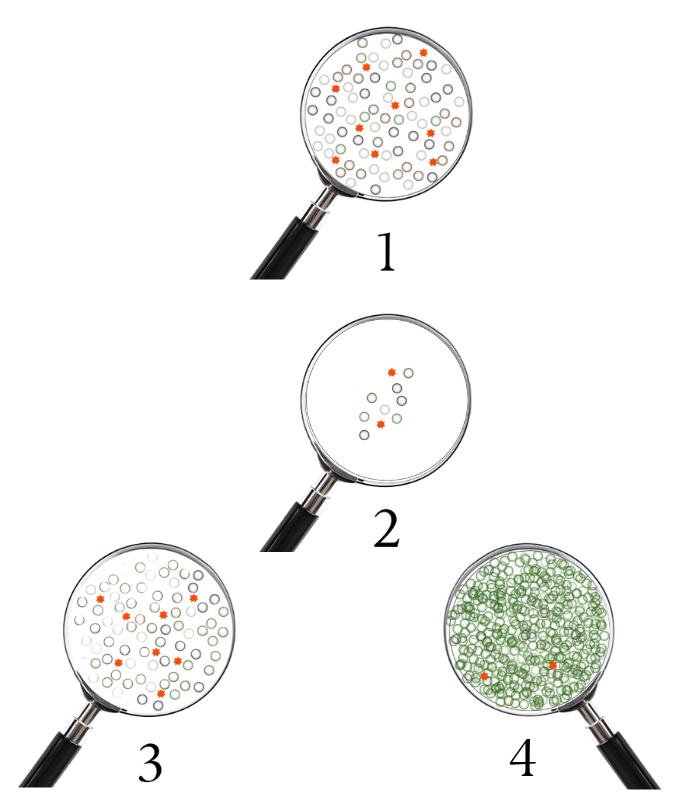
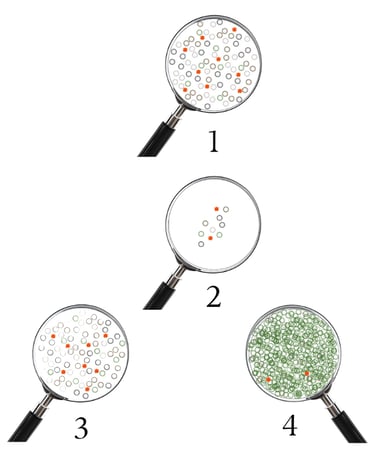
Probiotic Cleaning doesn't fight against nature-it plays by its rules!
The Elite Strains : Precision Biotechnology
Safety First. Performance Always.
"At Simply Life, we don't just use 'bacteria'. We use the best of the best. Our proprietary Bacillus spores are the result of rigorous laboratory selection. They are the high-performance athletes of the microscopic world, specifically chosen for their ability to protect your home with surgical precision."
1. The Highest Global Standards (Reassurance)
WHO Risk Group 1: Classified in the lowest risk category by the World Health Organization. Non-pathogenic and perfectly safe for babies, pets, and the most sensitive members of your family.
EFSA QPS Status: Our strains hold the Qualified Presumption of Safety (QPS) from the European Food Safety Authority, selected for their extraordinary genetic stability | Non-GMO | No Mutation | No Antibiotic Resistance | Consistent Performance
Food-Grade Quality: 100% harmless to humans and animals, meeting the strictest safety standards in Europe.
2. The Biological Factory (How they work)
Think of our probiotics as tiny, intelligent factories. Once activated on your surfaces, they produce targeted enzymes—biological "scissors" that cut through dirt and grime:
Proteases: Food & Protein residues
Amylases: Sugars & Starches
Lipases: Fats, Oils & Grease
Cellulases: Organic Fibers
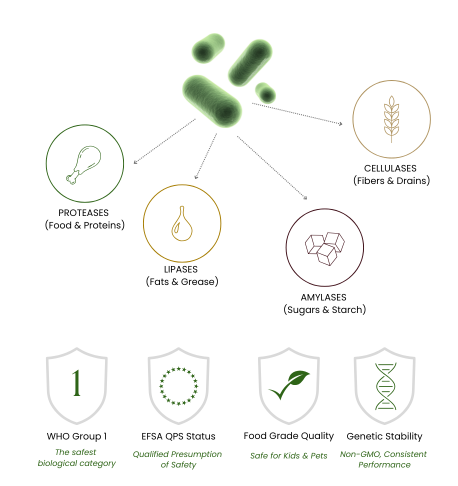
Mechanism of Probiotic Cleaning - Bacillus spores and enzymatic action
This is preventive hygiene: A living shield for a home that stays healthy, even when you’re busy living, 24/7 for at least 5 days.
Biological Rebalancing: The New Standard of Care
Your home is a living ecosystem, whether you like it or not. For decades, the myth of sterility forced us into a constant war against nature, fueling an endless cycle of cleaning and an exhausting mental load. By attempting to eradicate all life on our surfaces, we remove the natural "good" bacteria that act as a defensive barrier. This empty space is a golden opportunity for opportunistic organisms—which are often the fastest to multiply—to recolonize your home without any competition.
It’s time to stop fighting and start restoring.
Simply Life’s approach is different: we call it Biological Rebalancing.
Switching to probiotic cleaning means moving from a reactive war against germs to a proactive management of your home’s ecosystem. By seeding your home with probiotics, we aren't just removing dirt, we establish a self-sustaining bio-shield that works autonomously for at least 5 full days.
Your home becomes biologically balanced, keeping your surfaces healthy and your air purer.
01 Origin transforms your home into a sanctuary that protects your family and frees your mind.
Let nature do what it does best: maintain its own balance.


hello@simply-life.ch
© 2026. All rights reserved.
Join the Revolution on Instagram
Available in English and in French